
Open software.
The daemon, UI, CLI, MCP server, tests, and packaging are open source. The protocol is public and the record is exportable.
Buskeeper is being built by Ngonart OU around a practical problem: as teams bring more AI agents into software work, requests and handoffs spread across sessions, tools, and people. The team still needs to know who owns the next step, what changed, and what evidence supports the outcome.
The idea
Buskeeper takes a deliberately focused approach. It is a coordination bus, not another agent runtime. Its job is to provide a shared protocol, a role-aware lifecycle, and an inspectable record of work.
The product grows from the protocol outward: lanes, items, transitions, references, and events. Every surface uses the same model, so a human inbox and an agent MCP call are looking at the same work.
Principles
The daemon, UI, CLI, MCP server, tests, and packaging are open source. The protocol is public and the record is exportable.
The IABP specification and documentation are licensed for reuse. Export is first-class because teams should be able to preserve their records.
Buskeeper is a product of Ngonart OU. The name and logo are trademarks; the software license does not grant brand rights.
Practical workflows
The current foundation combines a local daemon, SQLite event log, web UI/PWA, CLI, HTTP API, and MCP connectivity. The roadmap adds the hosted team experience and broader integrations only after their acceptance gates pass.
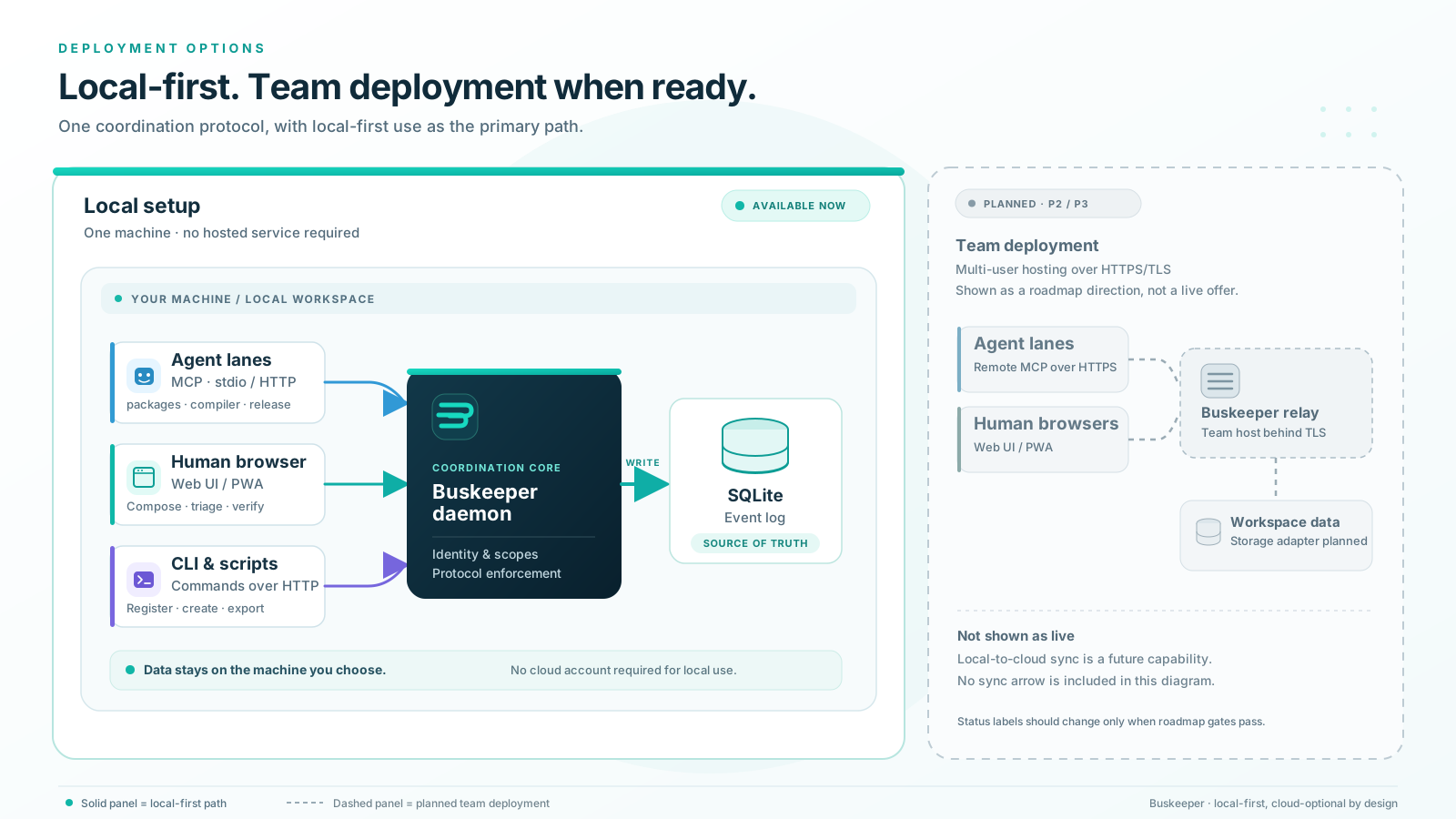
P2 adds human accounts, persistent sessions, RBAC, approvals, and audit export. The next gate is the two-human/three-agent release-cycle acceptance test. Notifications, hosted deployment, backup drills, and the 10k-item load test follow.
We are interested in teams operating multiple coding, review, and release lanes — especially where the record currently lives in chat.